








By Nura Garba and Hamza Usman
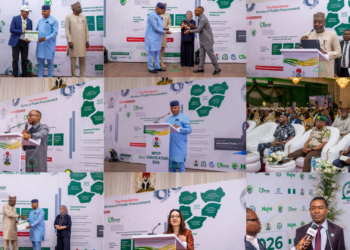
Smiles, relief, and heartfelt prayers from beneficiaries filled the air as Women Farmers Advancement Network (WOFAN), in a strategic collaboration with the Centre for Dryland Agriculture (CDA) and the Faculty of Agriculture, Bayero University, Kano (BUK), launched the Skills Improvement to Boost Livelihood and Nurture Growth (SIBLING) Initiative. This ambitious intervention aims at repositioning agricultural education, strengthening livelihoods, and accelerating youth-driven agribusiness development.
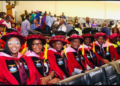
The initiative, which was formally unveiled on Tuesday by the Vice-Chancellor, Professor Haruna Musa, fsi, marked a significant milestone in WOFAN’s expanding footprint from rural communities into academic and research ecosystems, while reinforcing CDA’s mandate of translating research into real-world impact.

Designed as a two-year pilot programme, SIBLING seeks to strengthen agribusiness training, promote climate-smart agriculture, stimulate innovative student research, and encourage specialisation across key agribusiness value chains. Central to the programme is its livelihood component, which targets neighbouring communities and micro-agro marketers within and outside the university environment.
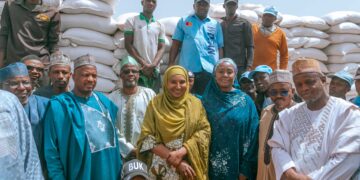
As a first-line intervention under the SIBLING framework, WOFAN distributed 560 bags of rice to 2,617 identified beneficiaries, mainly junior, casual, and outsourced low-ranking staff, prioritising women between the ages of 18 and 35 under its ICON2 initiative. The gesture was aimed at supporting small businesses, easing household food pressure, and reinforcing economic resilience, particularly ahead of the Ramadan season.
Declaring the initiative open, the Vice-Chancellor of Bayero University, Kano, Professor Haruna Musa, described SIBLING as a transformative programme for the university community. He said the initiative directly addresses the long-standing gap between theory and practice in agricultural education.
“Today marks the beginning of a transformative journey for our students and junior staff,” the Vice-Chancellor said. “This partnership equips our graduates with hands-on skills, improves employability, and makes agribusiness more attractive as a dignified and profitable vocation.”

He disclosed that facilities commissioned under the project include rice milling and processing units, briquette-making machines for converting rice husks into fuel, compost production units, and fisheries training sections. These innovations, he said, would promote value addition, youth participation, and sustainable agriculture.
Professor Musa commended WOFAN for providing equipment, inputs, and technical expertise, describing the collaboration with CDA as a model for effective university development and organisation partnerships with measurable social impact.
In her remarks, the WOFAN Group Executive Board Chair and United Nations POLAC Peace Ambassador, Dr Salamatu Garba, said SIBLING represents a deliberate scaling of WOFAN’s ICON2 project beyond rural communities into centres of learning, innovation, and research.
According to her, the initiative is built on a dual focus: empowering students through entrepreneurship-driven agricultural training and strengthening livelihoods among vulnerable groups.

“Our students study agriculture, but many lack entrepreneurial exposure. We want to change that,” she said. “Young people between 18 and 35 are the backbone of the economy, and they must be prioritised if agriculture is to become a tool for wealth creation.”
She explained that SIBLING would promote climate-smart agriculture, compost and biochar production, briquette making, rainwater harvesting, and circular-economy practices. The programme, she added, would also deploy climate information services, decision-support tools, and artificial intelligence applications to guide precision farming and improve soil management.
“At WOFAN, we only take tested and proven innovations to farmers. The time has come to transform agriculture sustainably,” Dr Garba said.
Earlier, the Chairman of the Local Organising Committee and Chairman of the Technical Board of Advisers for the WOFAN ICON2 Project, Professor Sani Miko, described the launch as a historic milestone for the university.

“In a rapidly changing economy, the gap between skills and market demand determines whether people thrive or struggle,” he said, describing SIBLING as a strategic investment in human capital aligned with the Mastercard Foundation’s vision of creating over 10 million dignified jobs in Nigeria by 2030.
On his part, the Director of the Centre for Dryland Agriculture, Professor Sanusi Muhammad Gaya, said the initiative reflects a deepened partnership between WOFAN and CDA rooted in shared vision and collective responsibility.
“Our goal is not to train job seekers, but to nurture innovators and entrepreneurs who will strengthen food systems and drive sustainable economic growth,” he said, adding that the rice distribution underscores the partners’ commitment to inclusivity and compassion.
The Dean of the Faculty of Agriculture, Professor Aminu Sulaiman, said the initiative aligns with the faculty’s goal of producing job creators rather than job seekers. He noted that students would receive end-to-end practical exposure across the rice, maize, and groundnut value chains from production to processing, packaging, and marketing.
“These facilities are not just machines; they are platforms for enterprise development,” he said.
Also speaking, the Chairman of the Non-Academic Staff Union (NASU), BUK branch, Comrade Abdullahi Nasiru Abdulrafiu, expressed appreciation to WOFAN, noting that nearly 90 per cent of the beneficiaries were NASU members.

Goodwill messages were presented by the former Vice-Chancellor, Aliko Dangote University of Science and Technology, Professor Shehu Alhji Musa, the immediate past Director of CDA, Professor Jibrin Mohammed Jibrin and NASU-BUK Chairman, Comrade Abdullahi Nasiru Abdulrafiu.
According to many beneficiaries, this intervention came at a critical moment in their lives.
“This support came at the right time, especially with Ramadan approaching,” said Zainab Umar, a junior staff member. “It has reduced the burden on my family in ways words can’t explain.”
Aisha Ismaila, a cleaner with one of the outsourced companies, admitted she was initially sceptical.
“I thought it was just talk,” she said. “But when we heard Dr Salamatu Garba speak during the launch and we then received the rice, I realised this empowerment is real. This is help we can feel.”
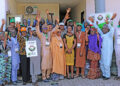
A group of five female junior staff members of the Non-Academic Staff Union (NASU) described the distribution as a lifeline, noting that it would significantly bridge food gaps in their households during the fasting period.
From neighbouring communities, Saratu Abubakar and Umma Sani could not hide their joy.
“We may not have big words,” they said, “but may Allah continue to bless Dr Salamatu Garba for remembering people like us”.
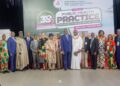
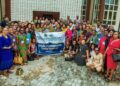
The SIBLING launch ceremony drew university management, academic and non-academic staff, students, and development partners, reinforcing the growing role of WOFAN–CDA collaboration in strengthening agricultural education, youth empowerment, and sustainable livelihoods in Kano State.
… BUK Inaugurates WOFAN Chair to Head CDA Industry Advisory Board
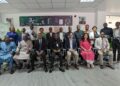
In a related development, the Vice-Chancellor of BUK, on Wednesday, inaugurated the Sectoral Industry Advisory Board (SIAB) of the Centre for Dryland Agriculture (CDA), with Hajiya Dr Salamatu Garba, Chairperson of the Women Farmers Advancement Network (WOFAN) International Group, as Chair of the Board.
In his remarks, the Vice-Chancellor said the calibre of professionals appointed to the Board would significantly strengthen the capacity of CDA to advance food security in Nigeria. He prayed for divine guidance for the members as they undertake what he described as a demanding and strategic responsibility.
Earlier, the Director of the Centre for Dryland Agriculture, Professor Sanusi Gaya Mohammed, introduced members of the Board and explained that the SIAB had been reconstituted as the Centre’s second board. He noted that the Board comprises 12 members, seven external and five internal, carefully selected to provide industry-driven guidance and strategic oversight for the Centre.
Speaking on behalf of the board, Dr Garba said members were honoured to be entrusted with such an important assignment. She pledged the Board’s commitment to giving its best in support of the Centre’s mandate. Describing the assignment as both a privilege and a challenge, she noted that serving in a highly reputable institution with abundant talent demands teamwork and mutual support. “As the only female on the Board, the responsibility is even greater, but I seek the cooperation and guidance of my colleagues to help move this University to greater heights beyond our imagination,” she said.
Other external members of the Board include Alhaji Nasiru Wada (Magajin Garin Kano) and Managing Director of Esoterra Investment Ltd; Alhaji Ali Safiyanu Madugu, mni, Managing Director/Chief Executive Officer of Dala Foods Nigeria Limited; Dr Mohammed Salasi Kibiya, Country Representative of IFDC; Alhaji Yusuf Ado Kibiya, Managing Director/Chief Executive Officer of Chimande Nigeria Limited; Dr Donald Madukwe of OCP; and Abubakar Garba Ibrahim of SILVEX International Limited.
The internal members are the Director of CDA, Professor Sanusi Gaya Mohammed; the immediate past Director of CDA, Professor Jibrin Mohammed Jibrin; the Deputy Director (Training), Professor Murtala Mohammad Badamasi; the Deputy Director (Research), Dr Mustapha Mohammed Bello; and the Deputy Director (Outreach and Publication), Dr Amina Lawan Mustapha.
Following the inauguration, the Board held its maiden meeting at the Centre for Dryland Agriculture, where members deliberated on key issues, including strategies for sustaining the Centre beyond the expiration of World Bank funding.