


By Isaiah Christopher
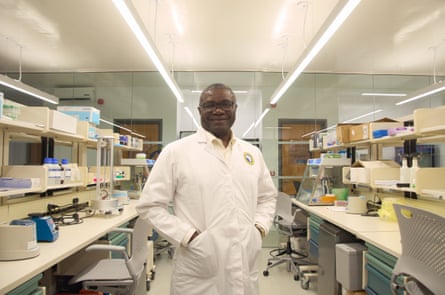
To mark World Health Day, the Global Health EDCTP3 recently recognised ten researchers shaping the future of global health. Among them is Professor Christian Happi, whose work has fundamentally rewritten the narrative of infectious disease surveillance in sub-Saharan Africa.
As the director of the Africa Centre of Excellence for Genomics of Infectious Diseases (ACEGID), now known as the Institute of Genomics and Global Health (IGH), Prof. Happi is not just studying infectious diseases; he is building a proactive, continent-wide defence system that moves at the speed of the pathogens it tracks.
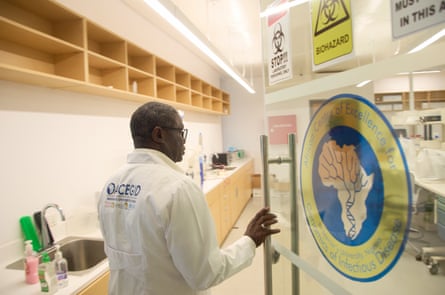
The End of “Outsourced Science”
For decades, Africa’s role in global health was often relegated to sample collection. During the 2014 Ebola outbreak, Prof. Happi recalls a sombre reality: samples were frequently flown out of the continent for analysis, with results sometimes returning two years later, long after the outbreak had already claimed thousands of lives.
“That delay was a death sentence,” Happi remarked in a recent perspective. Today, that script has been flipped. Under his leadership at IGH, the era of external dependence is being replaced by scientific sovereignty. By leveraging genomic tools on the ground, African teams now identify viruses and track mutations in real-time, developing diagnostic tests within days rather than years.
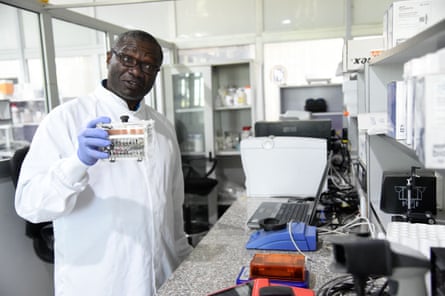
The Sentinel Model: A Blueprint for Global Security
A cornerstone of this impact is the Sentinel Project, a high-tech collaboration between IGH and the Broad Institute. Built on the three pillars of real-time surveillance, open data sharing, and translational research, Sentinel acts as an early-warning system for the world.
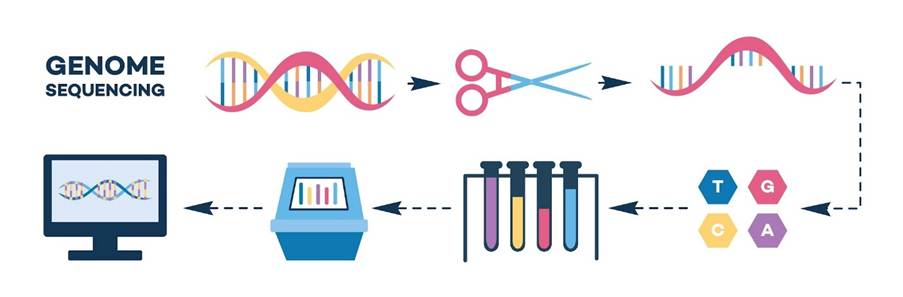
Shutterstock
The impact of this model is best seen through its track record:
- SARS-CoV-2: African scientists sequenced the virus within 48 hours of the first confirmed case on the continent.
- Ebola: Rapid genomic containment in Lagos prevented what could have been an urban catastrophe.
- Marburg & Mpox: Swift identification allowed for targeted, life-saving interventions in Rwanda and beyond.
By training over 3,000 health workers across 53 African countries, Prof. Happi is ensuring that these “pockets of excellence” grow into a continent-wide infrastructure.
Why African Leadership Matters
Africa holds approximately 70% of pathogens with pandemic potential. Therefore, the continent’s ability to monitor its own biological landscape is not just a local priority; it is a matter of global security.
Prof. Happi’s vision transcends technical data; it is about equity. As he noted, following support from the MacArthur Foundation, “Solutions to global health challenges can be led from Africa.” This “trusted research environment” ensures that African scientists lead the narrative, protecting both their communities and the wider world.
The Road Ahead: A Call for Vigilance
The question is no longer “if another pandemic will strike, but when”. As global health funding faces potential cuts, the “many hands” required to manage emerging diseases are at risk of falling away.
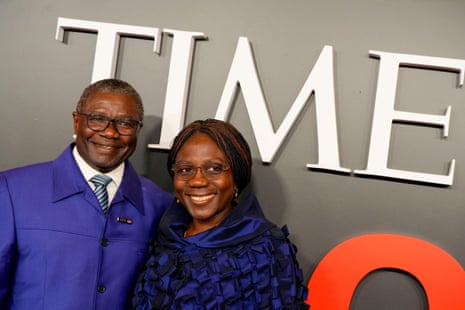
The work of Prof. Christian Happi and the IGH serves as a powerful reminder: the frontline of global health begins with the data, the speed, and the leadership emerging from Africa. Investing in this capacity today is the only way to avoid the astronomical costs of a pandemic tomorrow.
Through his dedication to locally driven solutions and sustainable impact, Prof. Happi is proving that when it comes to global health, Africa is no longer just a recipient of aid; it is a provider of expertise and security for the entire planet.