


By Nusaiba Ibrahim
The Africa Centre of Excellence for Population Health and Policy (ACEPHAP), Bayero University Kano (BUK), is partnering with the International Centre for Diarrhoeal Disease Research, Bangladesh (icddr,b) to adapt and pilot the Q-Mat, a low-cost tool for earlier recognition of Postpartum Haemorrhage (PPH), among women who deliver at home in north-western Nigeria.
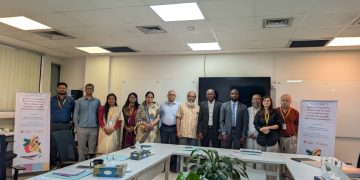
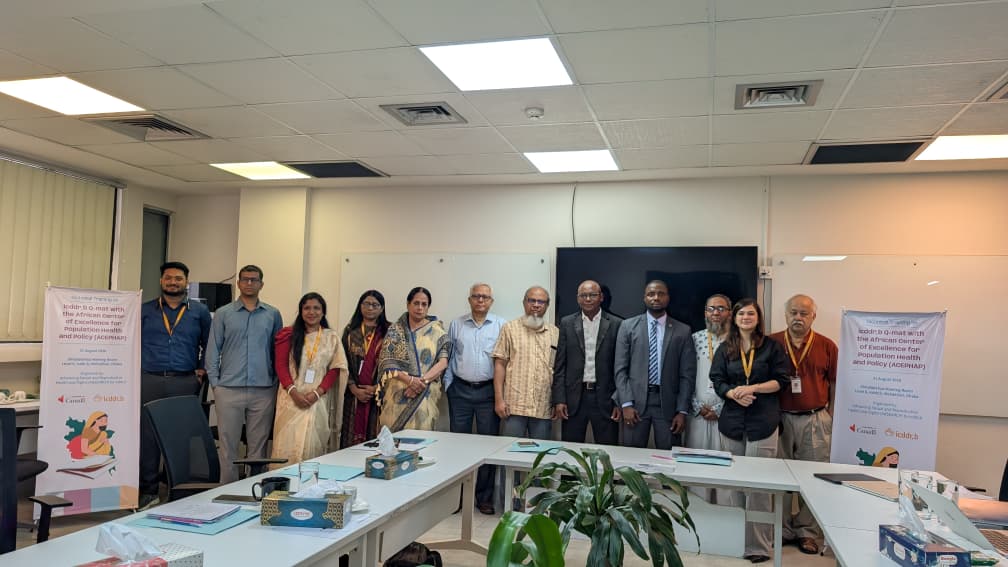
The partnership was formalised during a technical training and knowledge-exchange session held from 31 August to 3 September 2026 at icddr,b’s headquarters in Mohakhali, Dhaka. ACEPHAP was represented by Prof. Ayuba Rabiu, a Consultant Obstetrician and Gynaecologist at Aminu Kano Teaching Hospital, and Dr Aminu Ado Wakili, a Research Fellow and Programme Manager at ACEPHAP.
PPH remains one of the leading, yet preventable, causes of maternal mortality, particularly in low-resource settings with a high burden of home deliveries. While the E-MOTIVE innovation uses a calibrated drape to detect PPH in facility deliveries, addressing the same challenge at home requires tools simple enough for community health workers and lay people to recognise excessive blood loss early and arrange timely transport to a facility.
That is where the Q-Mat comes in. Developed in Bangladesh in 2006 under the leadership of Dr Mohammad Abdul Quaiyum of icddr,b, it is a simple, low-cost, biodegradable birthing mat that helps detect potentially excessive bleeding after childbirth. When fully soaked, the mat holds approximately 450 mL of blood, giving a clear visual warning that can prompt urgent assessment or referral, particularly in settings without sophisticated blood-loss monitoring equipment.
ACEPHAP will support the adaptation and implementation of the Q-Mat in selected communities with a high burden of home births in north-western Nigeria, under the Community Bundle Innovation Project (ComBIP), which aims to reduce maternal morbidity and mortality in home deliveries. The work forms part of a broader initiative, “Integrating icddr,b Q-Mat in Maternal Health Standard Operating Procedures (SOPs) and Learning from the Demonstration in Selected Public Health Settings,” implemented under icddr,b’s Advancing Sexual and Reproductive Health and Rights programme.
The Dhaka session allowed both teams to review the Q-Mat’s development, the evidence and implementation experience from Bangladesh, and how the tool might be adapted to Nigeria’s health-system context, especially for home deliveries. Discussions also covered broader opportunities for maternal-health collaboration and laid the groundwork for demonstrating the innovation in selected Nigerian communities, generating lessons that could inform its integration into routine maternal-health practice and standard operating procedures.
The partnership marks an important step in translating an evidence-informed innovation developed in Bangladesh into a context-appropriate maternal-health intervention for Nigeria. Beyond introducing the Q-Mat, the collaboration will generate practical lessons on its feasibility, acceptability, local production and integration into existing maternal-health services.